
What Is Haulage? A Practical Guide to Moving Large Goods Across Nigeria
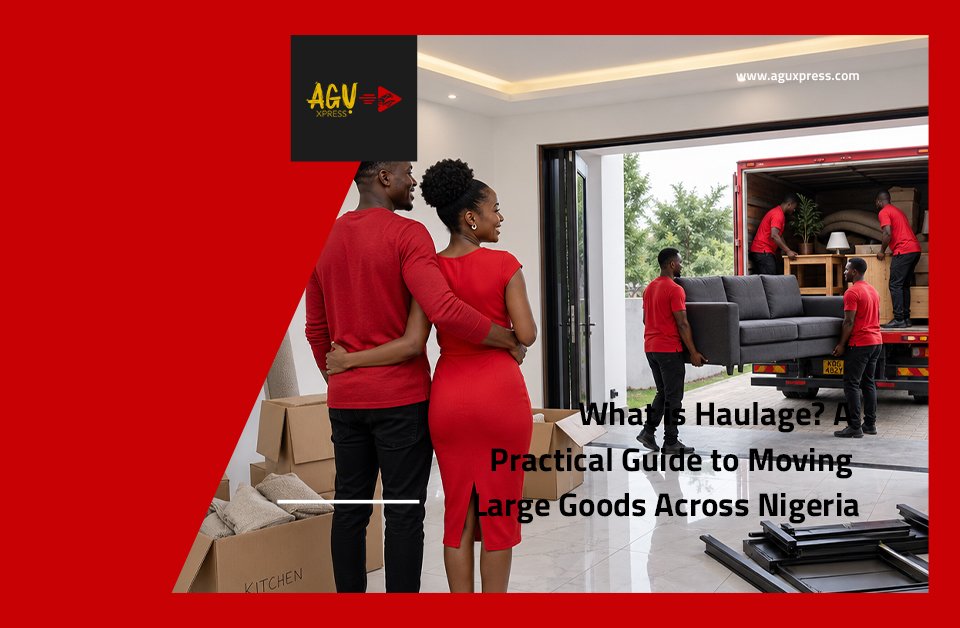
Moving a few packages from one location to another is relatively straightforward. But what happens when the items are too large, too heavy, or too numerous to fit into an ordinary delivery vehicle?
Perhaps you are relocating your entire household from one city to another. Maybe your business needs to move office furniture, equipment, or inventory. Or perhaps you need to transport a large quantity of goods across Nigeria and do not have the right vehicle or manpower to handle the job yourself.
Suddenly, ordinary delivery is no longer enough.
You need the right vehicle, proper loading, careful handling, route planning, and a logistics provider that understands how to move large loads safely and efficiently.
This is where haulage comes in.
Haulage is an important part of the logistics industry, particularly for businesses and individuals who need to transport large quantities or bulky goods over short or long distances. In Nigeria, where goods constantly move between cities, states, markets, businesses, warehouses, and homes, reliable haulage services can make these movements considerably easier.
In this practical guide, we will explain what haulage means, how it works, what types of goods can be transported, when you should consider using a haulage service, the challenges involved in moving large goods across Nigeria, and what to look for when choosing a reliable logistics provider.
What Is Haulage?
Haulage refers to the transportation of goods, cargo, equipment, or other large loads from one location to another, usually by road.
Unlike conventional courier or dispatch services, which are generally designed for smaller packages, haulage is intended for larger, heavier, or higher-volume loads that require suitable vehicles and additional transportation planning.
For example, transporting a document from Awka to Onitsha would normally require a regular dispatch or courier service.
However, moving an entire office, transporting several pieces of furniture, relocating household belongings, or moving large quantities of business inventory may require haulage.
The vehicle used depends on factors such as:
- The size of the goods
- The total weight of the load
- The distance involved
- The nature of the items
- How the goods need to be loaded and unloaded
- The road and destination conditions
This is why professional haulage is more than simply putting large items into a vehicle and driving them somewhere.
The right transportation solution needs to match the load.
Haulage vs. Regular Delivery: What’s the Difference?
One common question is whether haulage is simply another name for delivery.
Not exactly.
Regular delivery or dispatch services are generally designed for smaller shipments that can be transported efficiently using motorcycles, cars, vans, or other relatively compact vehicles.
Haulage, on the other hand, focuses on large-scale transportation.
Consider these two examples.
If you are sending a customer’s pair of shoes across town, a dispatch rider may be sufficient.
But if you are relocating an office containing desks, chairs, computers, cabinets, and other equipment, using a motorcycle would obviously not be practical.
You need a vehicle capable of carrying the load safely.
This is the fundamental difference.
Dispatch focuses on efficiently moving smaller shipments. Haulage focuses on moving larger or heavier loads.
Both are important components of logistics services in Nigeria, but they serve different transportation needs.
What Types of Goods Can Be Transported Through Haulage?
Haulage can be useful for a wide range of large-scale transportation requirements.
1. Household Items
People relocating to another home or city may have furniture, appliances, mattresses, boxes, electronics, and other belongings that cannot be transported conveniently through ordinary delivery services.
A suitable haulage vehicle can accommodate these items and transport them together.
2. Office Equipment and Furniture
Businesses relocating offices may need to move desks, chairs, cabinets, computers, equipment, and other assets.
Instead of transporting these items individually, haulage allows multiple items to be moved as part of a coordinated shipment.
3. Business Inventory
Businesses that purchase or distribute products in large quantities may need to transport stock between suppliers, warehouses, shops, and other business locations.
Haulage can provide the capacity required for these movements.
4. Large Equipment
Some businesses have machinery, equipment, or other bulky assets that require specialised transportation arrangements.
The vehicle and handling process should be determined based on the characteristics of the equipment.
5. Large-Scale Relocations
Whether it is a household, office, shop, or business operation, relocation can involve a significant amount of goods.
Haulage services can simplify this process by allowing many of the items to be transported together.
When Should You Consider Using a Haulage Service?
You do not necessarily need haulage every time you want to move something.
A good way to determine whether haulage is appropriate is to consider the size, weight, quantity, and transportation requirements of your goods.
You may want to consider a haulage service when:
- You are moving a large quantity of goods.
- Your items are too bulky for ordinary delivery vehicles.
- You are relocating a home or office.
- You need to move business inventory.
- You require a suitable vehicle for a large load.
- Loading and unloading require additional manpower.
- You need several large items transported at once.
Trying to force a large shipment into an unsuitable delivery arrangement can create unnecessary complications.
Choosing the right transportation method from the beginning can make the entire process considerably smoother.
How Does Haulage Work?
Professional haulage typically involves several stages.
1. Assessing the Load
The first step is understanding exactly what needs to be transported.
The logistics provider may need information about the type, quantity, dimensions, and approximate weight of the goods.
This helps determine the most appropriate transportation arrangement.
2. Selecting the Appropriate Vehicle
Different loads require different vehicles.
A relatively small relocation may require one type of vehicle, while a much larger commercial shipment may require something with significantly greater capacity.
Vehicle selection should therefore be based on the actual requirements of the shipment rather than simply choosing the largest vehicle available.
3. Planning the Transportation
The logistics provider considers the pickup location, destination, route, timing, and other relevant factors.
This becomes particularly important when goods need to travel over long distances or across state borders.
4. Loading the Goods
Large items need to be loaded carefully.
Poor loading can increase the risk of damage during transportation, particularly when goods can shift or collide with one another.
Proper positioning and securing of items are therefore important parts of the process.
5. Transportation
Once the goods have been properly loaded and secured, they are transported to the destination.
Depending on the nature and distance of the shipment, communication and tracking may also be used to provide better visibility.
6. Unloading and Delivery
At the destination, the goods are unloaded and handed over to the recipient.
For large or heavy items, appropriate handling is particularly important during this stage.
Why Reliable Haulage Matters in Nigeria
Moving goods across Nigeria can involve a number of logistical challenges.
Traffic congestion, road conditions, long distances, weather, vehicle breakdowns, loading difficulties, and other unforeseen circumstances can affect transportation.
This is why choosing a reliable logistics provider matters.
A professional provider should understand that successful haulage involves more than simply moving a vehicle from Point A to Point B.
It requires planning, coordination, appropriate vehicle selection, careful handling, and communication.
For businesses especially, delays or damaged goods can have consequences beyond the transportation itself.
A delayed shipment may affect inventory availability. Damaged equipment may require expensive replacement. A delayed relocation may disrupt business operations.
Reliable logistics can therefore contribute directly to smoother business operations.
The Importance of Proper Handling During Haulage
Large goods can sometimes be more difficult to handle than smaller packages.
Furniture can be scratched, electronics can be damaged, fragile equipment can be affected by rough handling, and poorly secured goods can shift during transportation.
This is why preparation should begin before the vehicle even leaves the pickup location.
Items should be appropriately packaged or protected where necessary, and heavy or bulky goods should be loaded with care.
For particularly valuable goods, customers may also consider package insurance for deliveries or goods insurance coverage, depending on the nature of the shipment and the insurance options available.
Insurance does not replace proper handling, but it can provide an additional layer of financial protection against covered risks.
Haulage for Businesses: Why It Matters
For businesses, logistics is often closely connected to operations.
A retailer needs stock. A manufacturer needs materials. A distributor needs to move products. An office may need equipment transported to another location.
If the movement of those goods becomes unreliable, business operations can suffer.
This is particularly relevant to growing businesses that are expanding into new locations or increasing their inventory.
A dependable haulage partner can help businesses:
- Move inventory between locations
- Transport office equipment
- Relocate business operations
- Collect large purchases from suppliers
- Support distribution activities
- Transport goods between states
- Reduce the burden of managing transportation internally
Rather than purchasing and maintaining vehicles solely for occasional transportation requirements, some businesses may find it more practical to use professional logistics services when the need arises.
Haulage and Interstate Transportation
Nigeria is a large country with businesses, markets, suppliers, and customers spread across many states.
As a result, interstate transportation is an important part of the logistics ecosystem.
A business in one state may need to send inventory to another state. Someone relocating may need to move their belongings across state lines. A supplier may need to transport goods to a customer in another part of the country.
These situations can require transportation that goes beyond ordinary local dispatch.
This is where interstate delivery and haulage services can become particularly useful.
The logistics provider can plan the movement based on the quantity and nature of the goods, the origin and destination, and the transportation requirements involved.
Common Challenges of Moving Large Goods Across Nigeria
Moving large goods comes with challenges that should not be overlooked.
Traffic and Road Conditions
Long-distance transportation can be affected by congestion and road conditions.
Loading and Unloading
Large items can require additional manpower and careful coordination.
Vehicle Suitability
Using an inappropriate vehicle can create safety, capacity, or efficiency problems.
Delays
Unexpected circumstances can affect estimated delivery timelines.
Damage Risk
Poor packaging, loading, securing, or handling can increase the risk of damage.
Communication
Without proper communication, customers may have limited visibility into the progress of their shipment.
These challenges do not mean that haulage needs to be complicated.
They simply demonstrate why planning and experienced logistics support matter.
How to Choose a Reliable Haulage Provider
Before handing over a large shipment, consider several important factors.
Experience
Does the provider have experience handling large or bulky shipments?
Appropriate Vehicles
Can they provide transportation suitable for the size and nature of your goods?
Careful Handling
Do they have processes for loading, securing, transporting, and unloading goods safely?
Communication
Will you receive updates about your shipment when necessary?
Service Coverage
Can the provider transport goods to your required destination?
Insurance Options
If your goods are valuable, ask whether goods insurance or other protection options are available.
Reputation
Look for evidence that the provider consistently delivers reliable service.
The cheapest option is not necessarily the best option.
When valuable goods are involved, reliability, proper handling, and appropriate transportation can be more important than simply choosing the lowest price.
Making Large-Scale Transportation Easier With AguXpress
At AguXpress, our Haulage Service is designed to support individuals and businesses with larger transportation requirements.
Whether you are relocating a household, moving office equipment, transporting business inventory, or handling another large-scale transportation need, we provide secure and reliable movement of goods over short or long distances.
Our approach is built around using suitable vehicles and experienced handlers to help ensure that your belongings are transported with care.
For customers who need more than haulage, AguXpress also provides other logistics solutions, including pickup services, dispatch services, interstate delivery, overseas shipping, escrow services, and goods insurance coverage.
This allows individuals and businesses to access logistics solutions according to the type and scale of their transportation needs.
Moving Large Goods Doesn’t Have to Be a Logistics Headache
Moving large goods across Nigeria can quickly become complicated when you try to handle everything yourself.
From finding a suitable vehicle and organising loading to planning transportation and ensuring the goods arrive safely, there are several moving parts involved.
That is why professional haulage services can be valuable.
Whether you are relocating your home, moving an office, transporting business inventory, or sending large quantities of goods between locations, the right logistics partner can help simplify the process.
The most important thing is to choose a provider that understands the requirements of large-scale transportation and can provide the appropriate vehicle, careful handling, dependable communication, and reliable logistics support.
At AguXpress, we help individuals and businesses move large goods with greater confidence and less stress.
If you need haulage, interstate delivery, pickup and delivery services, or other logistics services in Nigeria, contact AguXpress today to discuss your transportation needs and find the right logistics solution for your shipment.